where the fields end and the desert starts
Free quotes for forestry mulching, brush and lot clearing, salt cedar removal, and grading — connected with a local Yuma operator.
Mesquite mulched, tamarisk grubbed, groves lifted, pads graded — fifteen jobs, each finished with the dust held down and every protected native still standing.
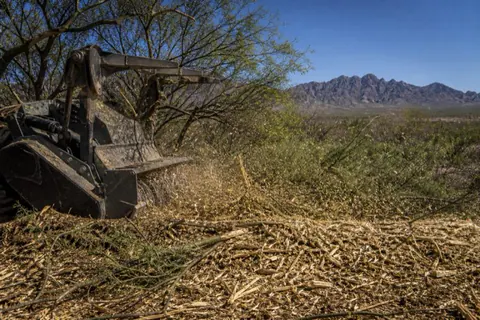
One machine, one pass: mesquite and creosote ground into a chip blanket that shades the sand and stays put in the wind.
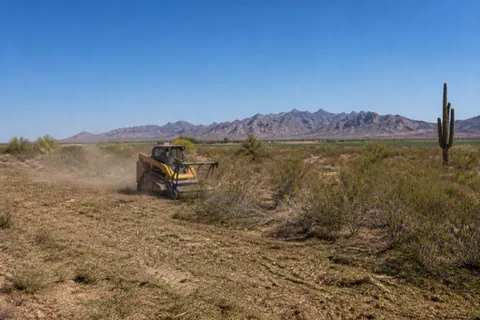
Creosote, arrowweed, and windblown tumbleweed cut out of lots and acreage — sightlines back, fire fuel gone, edges clean.
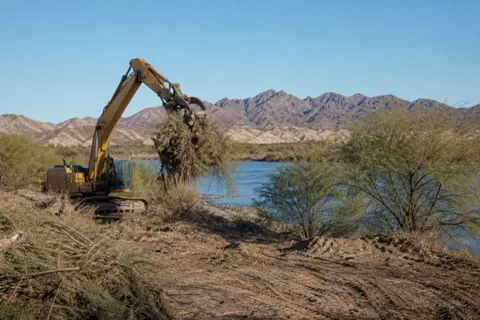
The valley's worst invader grubbed out by the roots — river-corridor thickets, ditch banks, and fence lines freed for good.
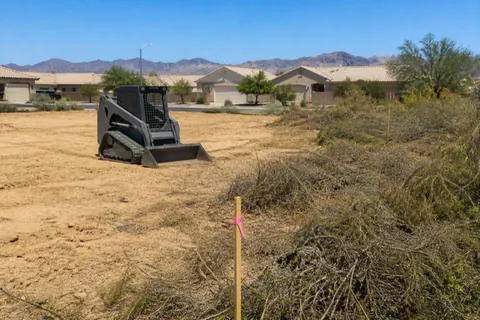
Scrub lots turned into clean, buildable ground — staked, cleared, watered for dust, and finished to the line.
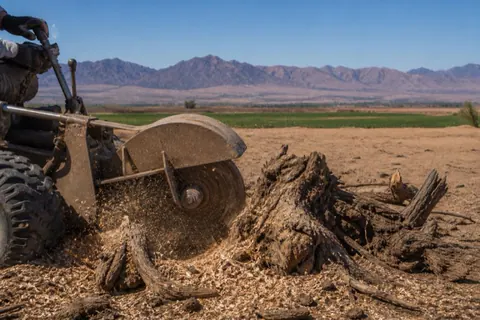
Mesquite, athel, and palm stumps ground below grade — no resprouts, no mound, no surprise for the trencher.
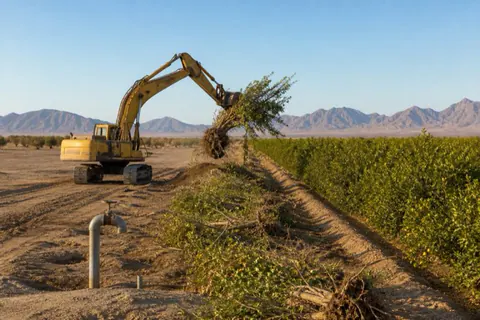
Spent lemon blocks and aging date rows lifted whole, roots raked, ground left ready for replant or development.
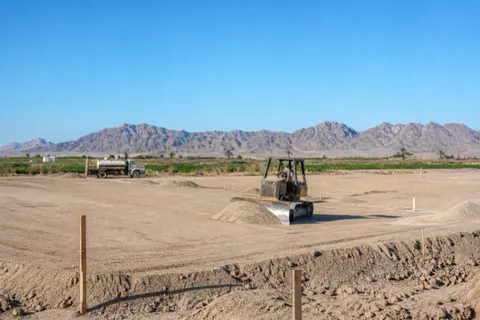
Pads cut, lots leveled, drainage set — finish grading tuned to loose mesa sand and the monsoon's once-a-year opinion.
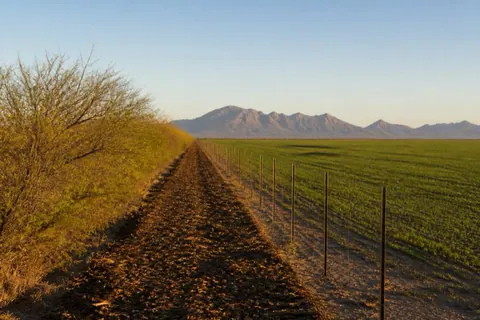
Wire freed from mesquite, tumbleweed drifts hauled off, and a maintainable strip cut along every boundary that's disappeared.
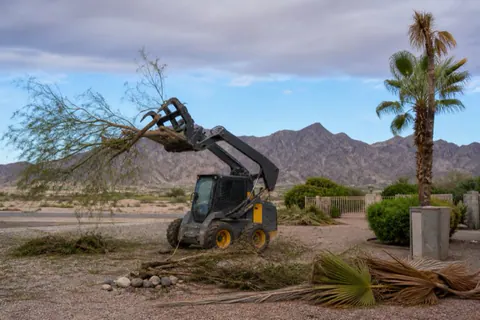
Monsoon aftermath handled — snapped athel limbs, downed palm crowns, and wind-thrown debris grappled, cut, and gone.
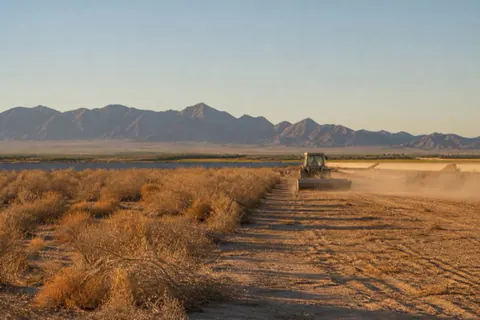
Fallow fields and let-go acreage brought back — regrowth mowed out, ditches freed, ground returned to farmable or salable shape.
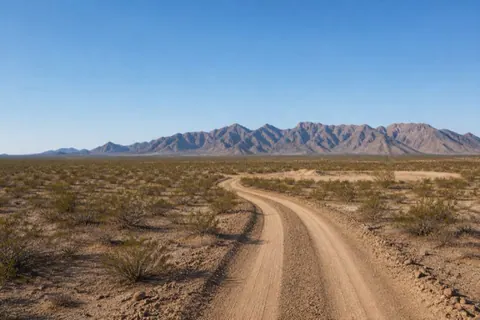
Drives and two-tracks cut through creosote country — brushed shoulders, respected washes, a route that survives its first storm.
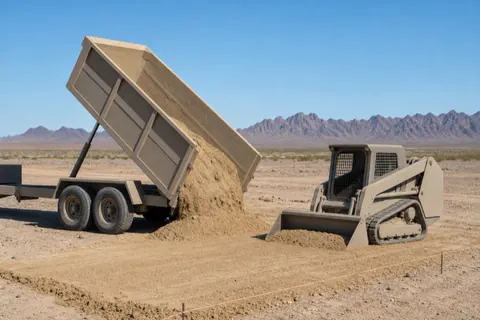
Sand and screened fill trucked in, placed in lifts, and compacted — low ground raised and pads built to actually hold.
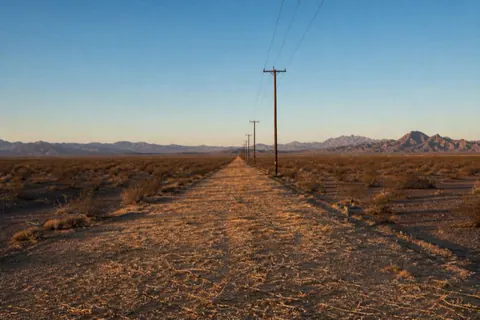
Easements and corridors cut to spec and kept open — pole lines, pipelines, and access strips across desert and farm ground.
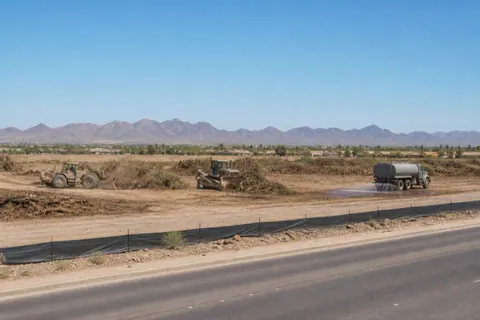
Multi-acre clears run like construction — dust plans, silt fence, phased work, and documentation your project team can build on.
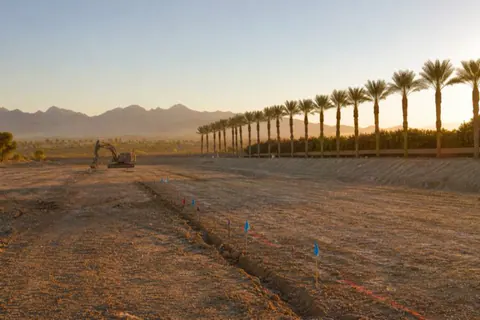
The dirt work between cleared and construction-ready — pads, basins, trench support, and grades that match the civil sheets.
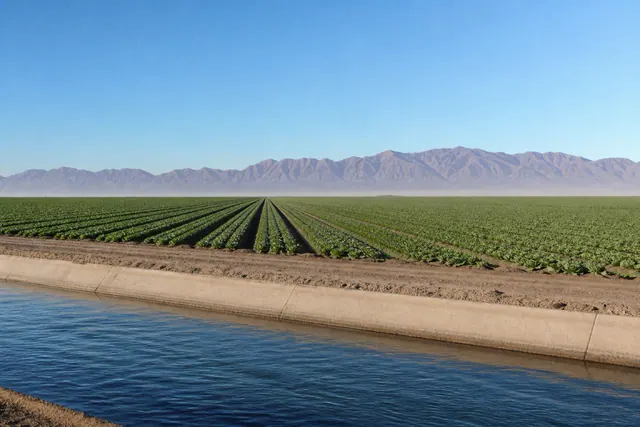
Yuma's growers laser-level their fields to the fraction of an inch. Clearing work around here gets judged by that same eye — clean lines, level finishes, nothing left half-done at the fence.
Yuma Mesa Land Clearing pairs property owners across Yuma County with a local clearing contractor for forestry mulching, brush and lot clearing, salt cedar removal, stump grinding, grading, and grove take-outs. Every job is planned for Lower Colorado Desert ground: tracked mulchers working mesquite and creosote on loose sand, a water truck on hand before the dust ever lifts, tamarisk grubbed by the roots along the river corridors instead of topped, spent citrus and date blocks lifted whole, and protected natives — every saguaro among them — flagged first and left standing.
Yuma is the sunniest place on earth by the record books, and it farms like it: the valleys along the Colorado and Gila rivers grow most of the country's winter lettuce on laser-leveled ground, while citrus and Medjool dates stand on the sandy mesa above. Barely three inches of rain falls in a typical year, so what takes over untended land here isn't lawn gone wild — it's mesquite, creosote, tumbleweed, and, along every ditch and river reach, salt cedar.
That mix sets the playbook. Tamarisk has to come out by the roots or it's back in two seasons. Mesquite mulches beautifully and the chips are worth keeping — bare sand blows, mulched sand doesn't, which matters in a county where a spring wind can move a dune. And clearing around here respects the line the law draws: saguaros and other protected native plants are identified before work starts and left standing, every time.
The work itself splits along Yuma's own geography. In town and in Fortuna Foothills it's lots, pads, and fence lines. In the Yuma, Gila, and Mohawk valleys it's fallow fields going back into production and ditch banks losing their tamarisk. On the mesa it's spent citrus blocks and date rows coming out ahead of whatever's next. Same machines, very different ground — and the quote should reflect that.
Form or phone — acreage, brush type, and what you want left when it's done.
Yuma Mesa Land Clearing hands your request to a local land clearing contractor who works your area.
Free on-site quote with each task priced on its own line. You decide from there.
It swings with what's growing and what you want left. A creosote flat that mulches in a single pass is the cheap end; dense salt cedar along a ditch, an old citrus block, or anything that has to be grubbed, hauled, and graded costs more per acre. Quotes through this site are free and broken out by task, so you see mulching, haul-off, and grading priced separately.
Yes — clearing runs year-round here. In the hottest months crews start at first light and wrap early, the same rhythm the farm crews use, and machine work isn't slowed by heat the way hand work is. The season to plan around is less the heat than the wind: dusty spring afternoons can pause a mulching job until the air settles.
Three ways, priced differently: mulch it in place so the chips stay as ground cover that keeps sand from blowing; pile and haul it off for a bare finish; or windrow it for later burning where county rules allow. On most desert lots, mulching in place is the least expensive and leaves the ground better behaved.
Saguaros are protected under Arizona's native plant law and are never removed — a clearing plan works around them, always. Other regulated natives like ironwood may require notice to the state before they're touched. Part of the first walk-through is flagging what must stay so the machine work never puts you on the wrong side of that law.
A typical residential lot of mesquite and creosote is usually a one-day mulching job once the machine is on site. Acreage, tamarisk thickets, and grove removals run days rather than hours because grubbing roots and hauling wood is slower than mulching brush. The quote spells out a real timeline for your specific ground.
The quote costs nothing and carries no obligation. Yuma Mesa Land Clearing is a local marketing site: your request goes to a land clearing contractor working the Yuma area, that contractor walks the property with you, and you deal with them directly on price, schedule, and the work itself.
free, no-obligation
 Yuma Mesa